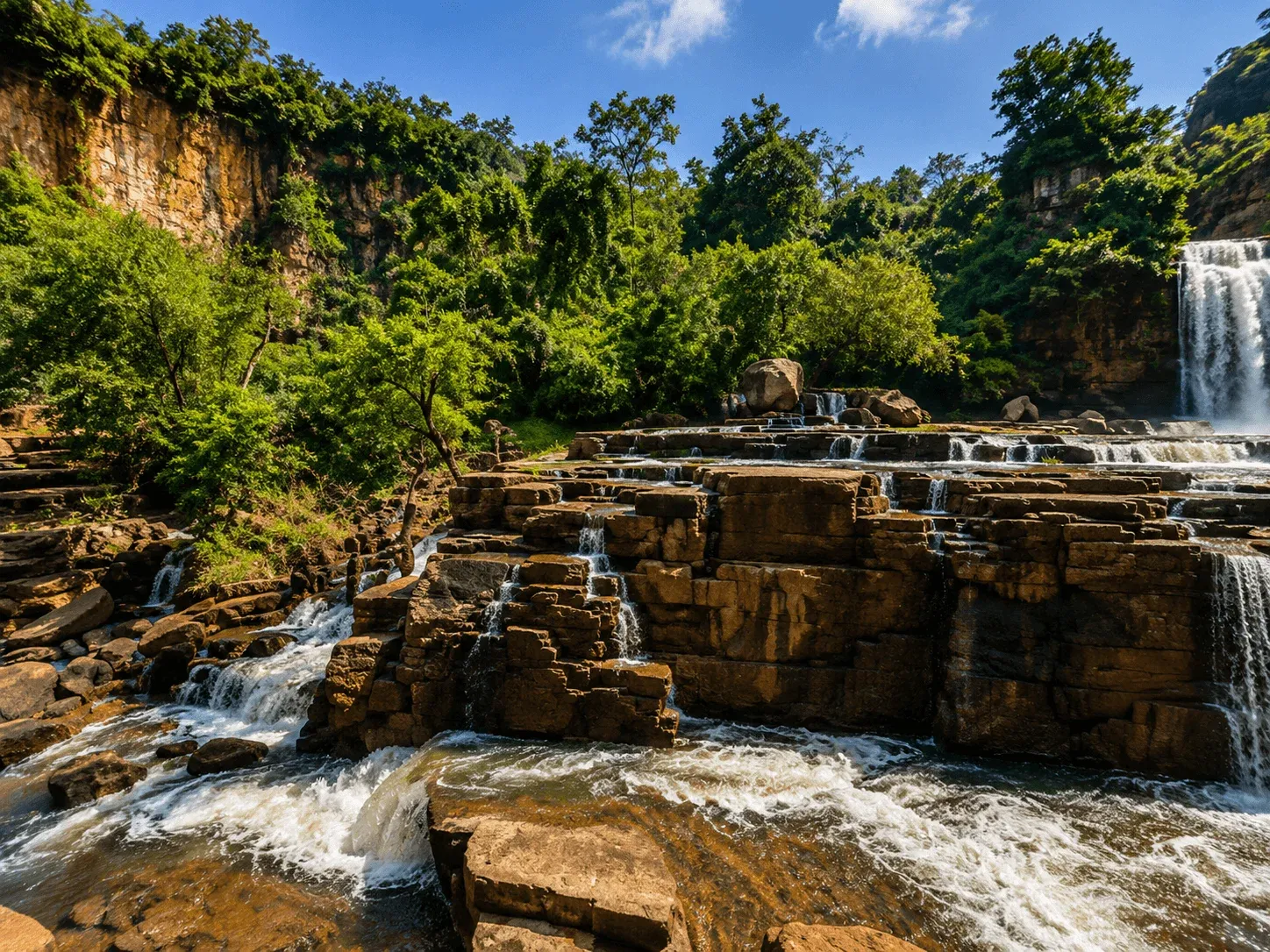
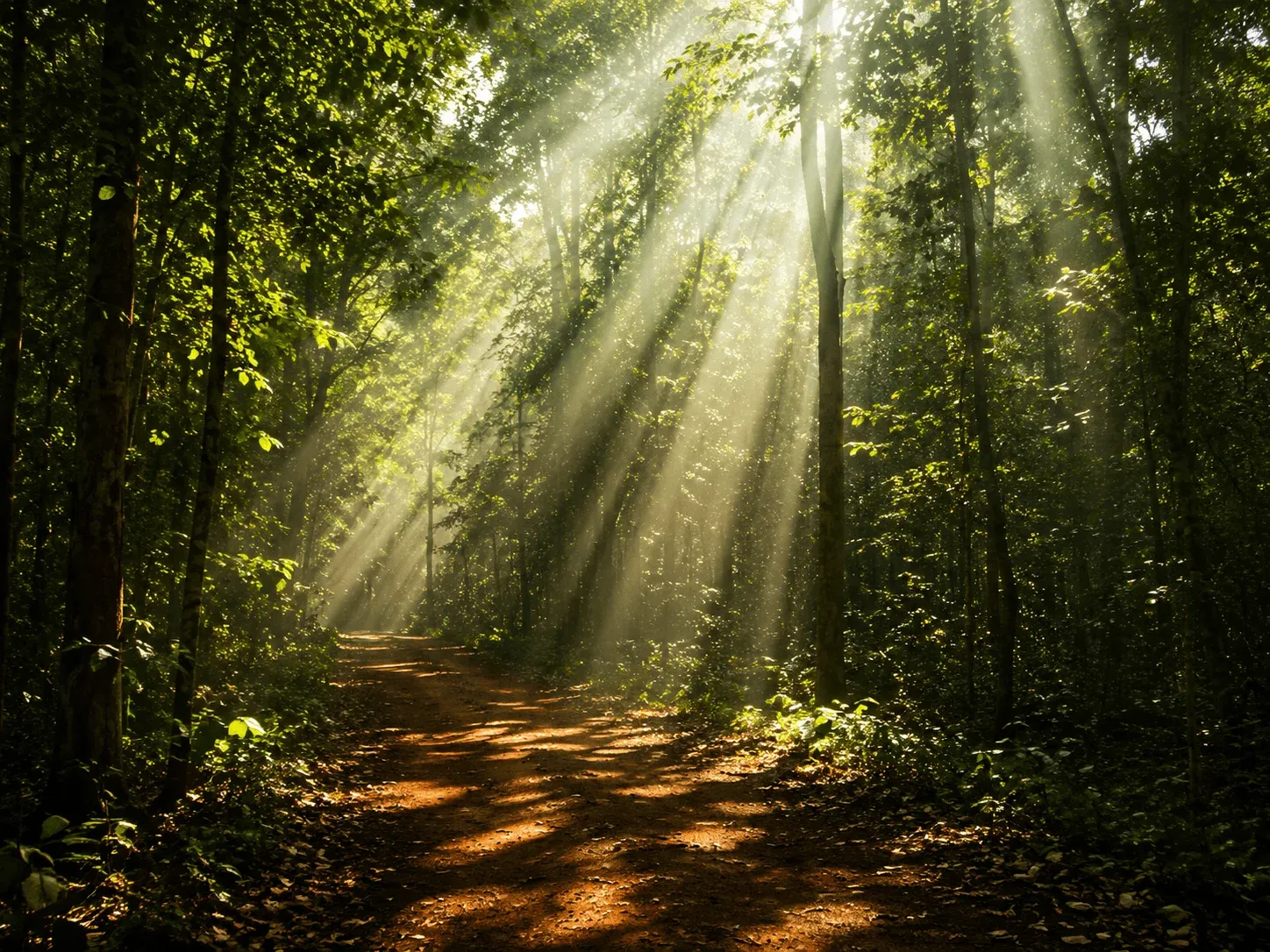
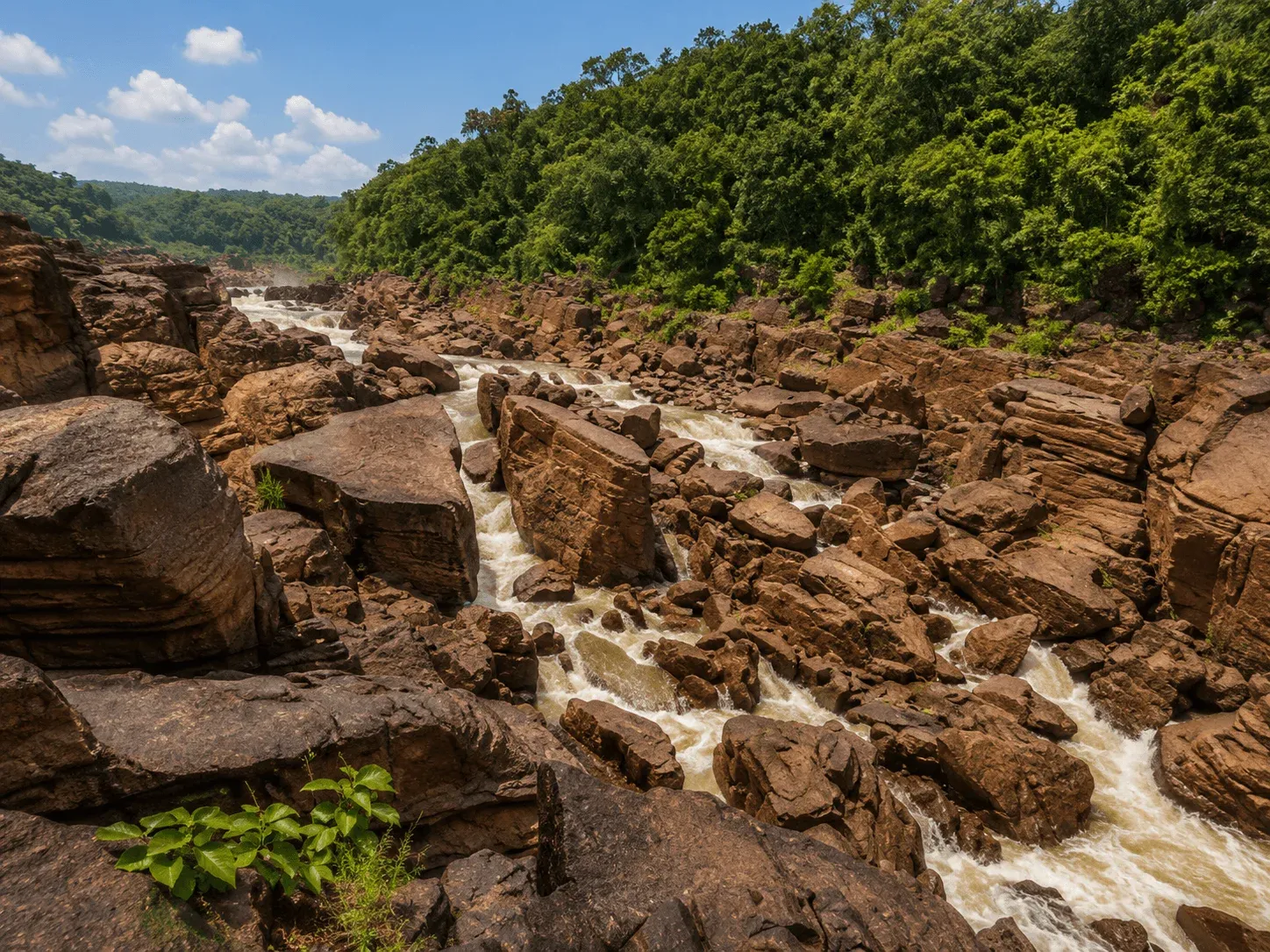
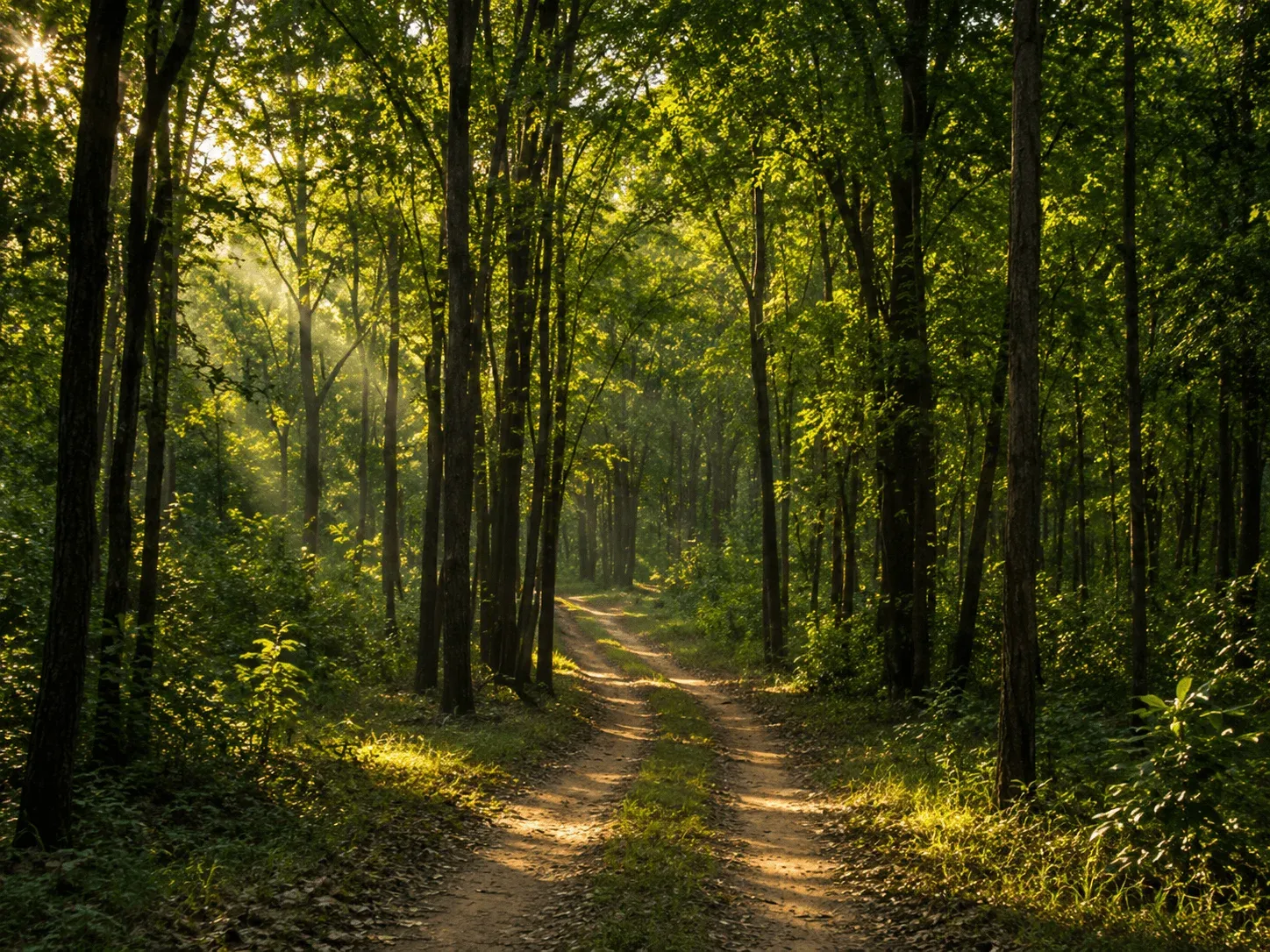
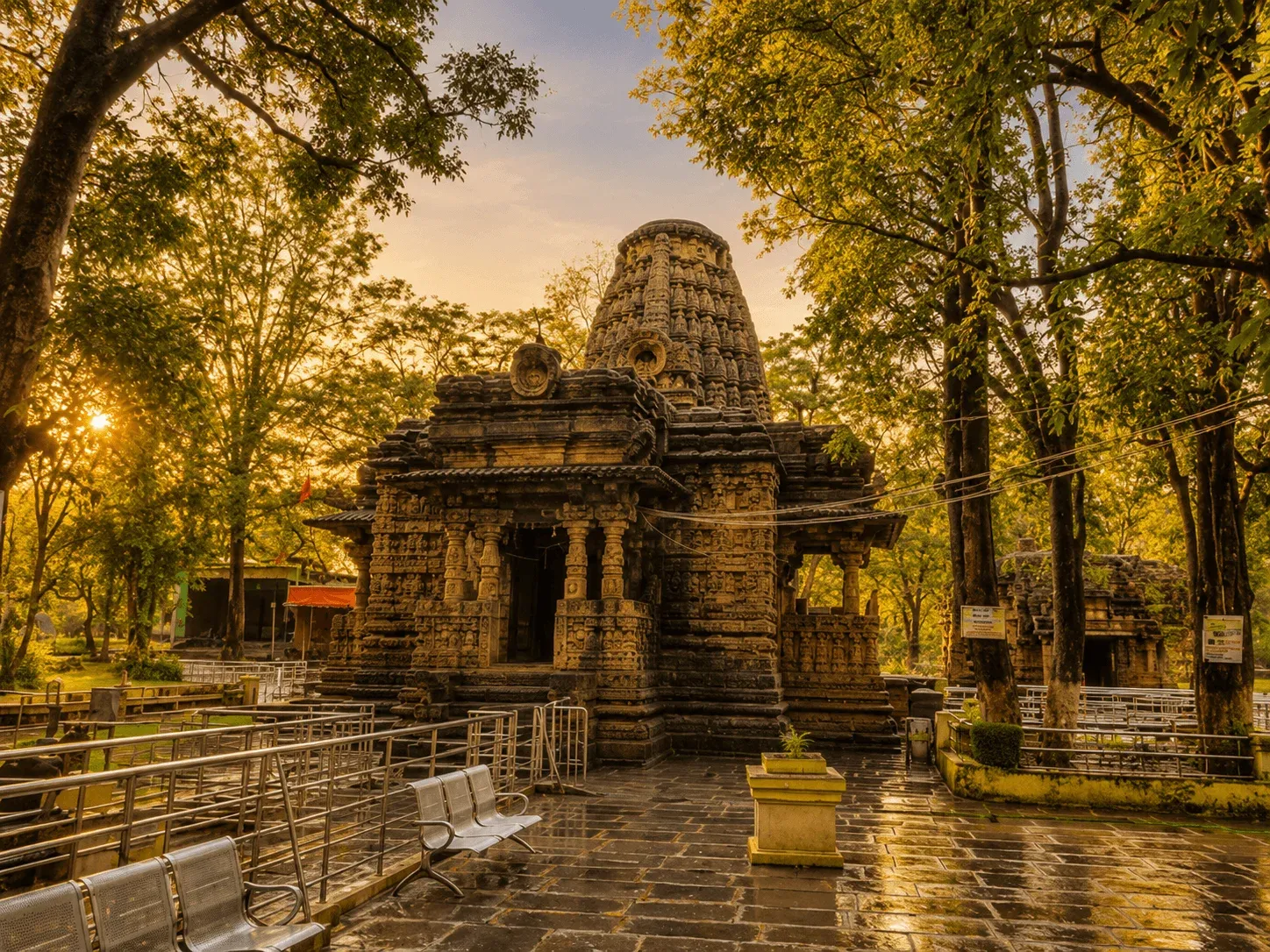
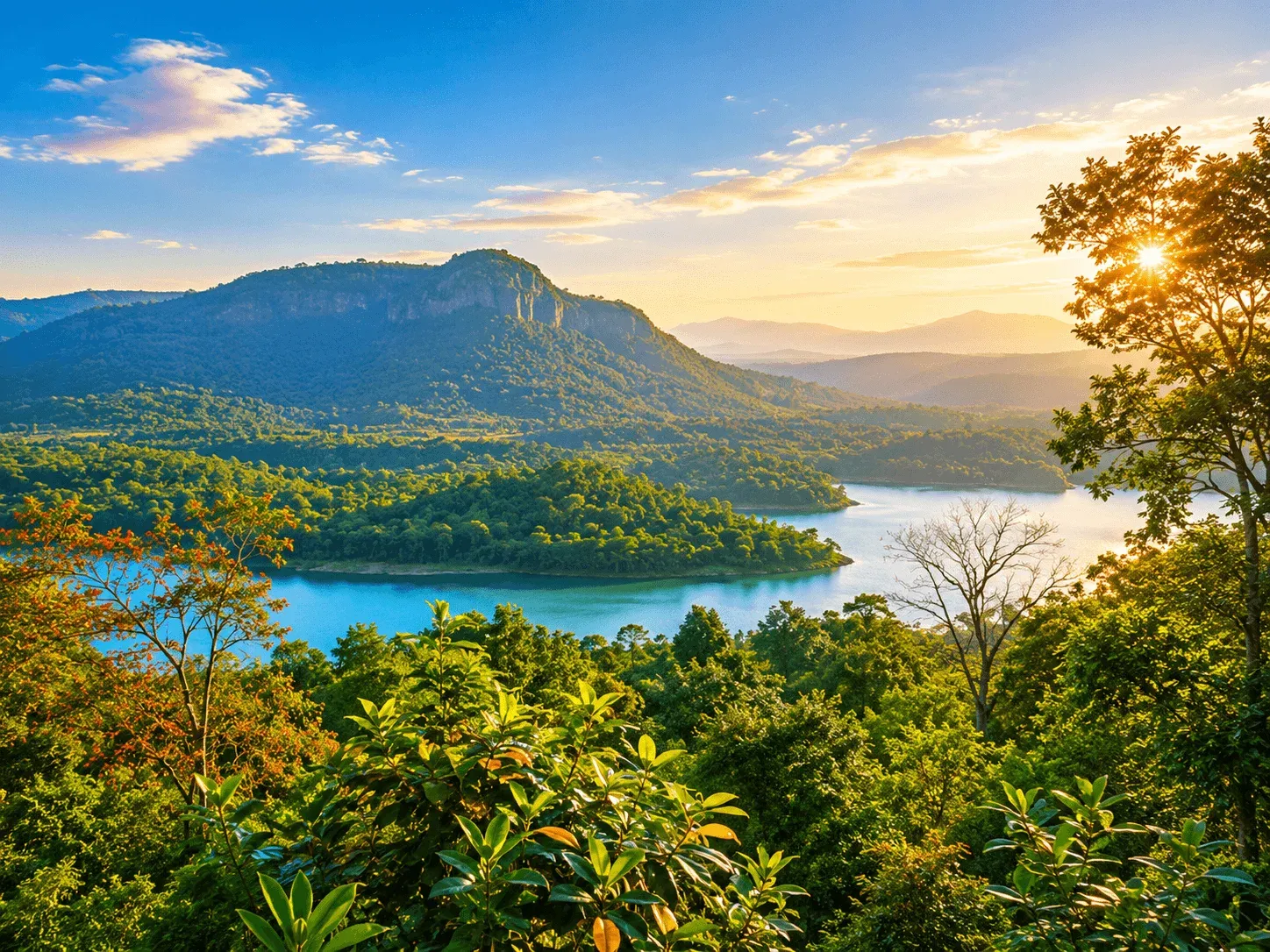
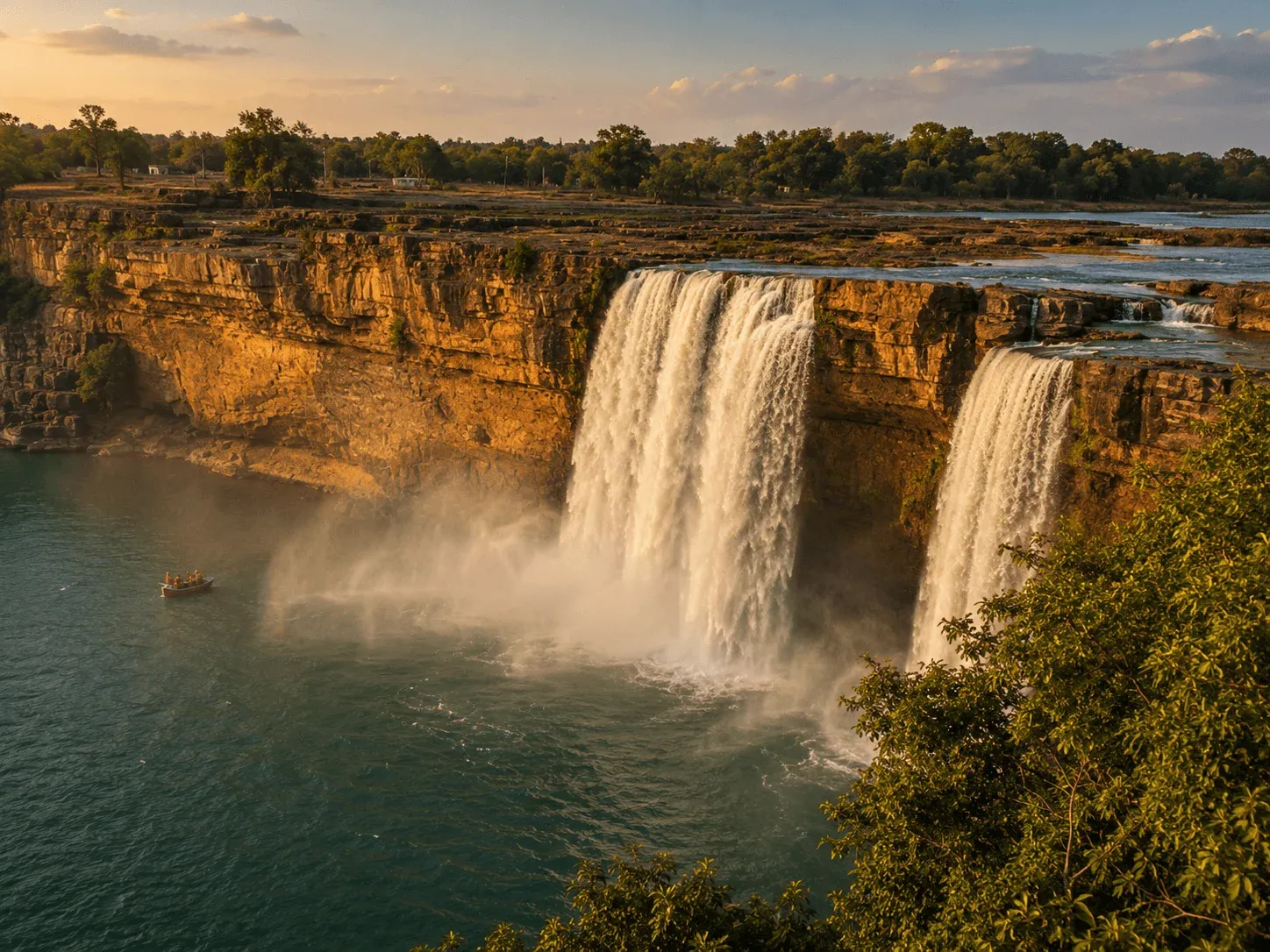
Spread across 200 square kilometres of dense mixed deciduous forest in Bastar, Chhattisgarh, Kanger Valley National Park is one of India's most biodiverse protected areas relative to its compact size — home to leopards, wild gaur, crocodiles, giant squirrels, and over 150 bird species including the state bird Bastar Hill Myna. The park is also extraordinary underground: three of India's most remarkable limestone cave systems — Kotumsar, Kailash, and Dandak — lie within its boundaries, alongside Tirathgarh Falls, which cascades 91 metres over seven rock terraces fed by the Kanger River.
Kanger Valley National Park
Bastar's Living Forest — Where Limestone Caves, Wild Rivers, and Dense Jungle Meet
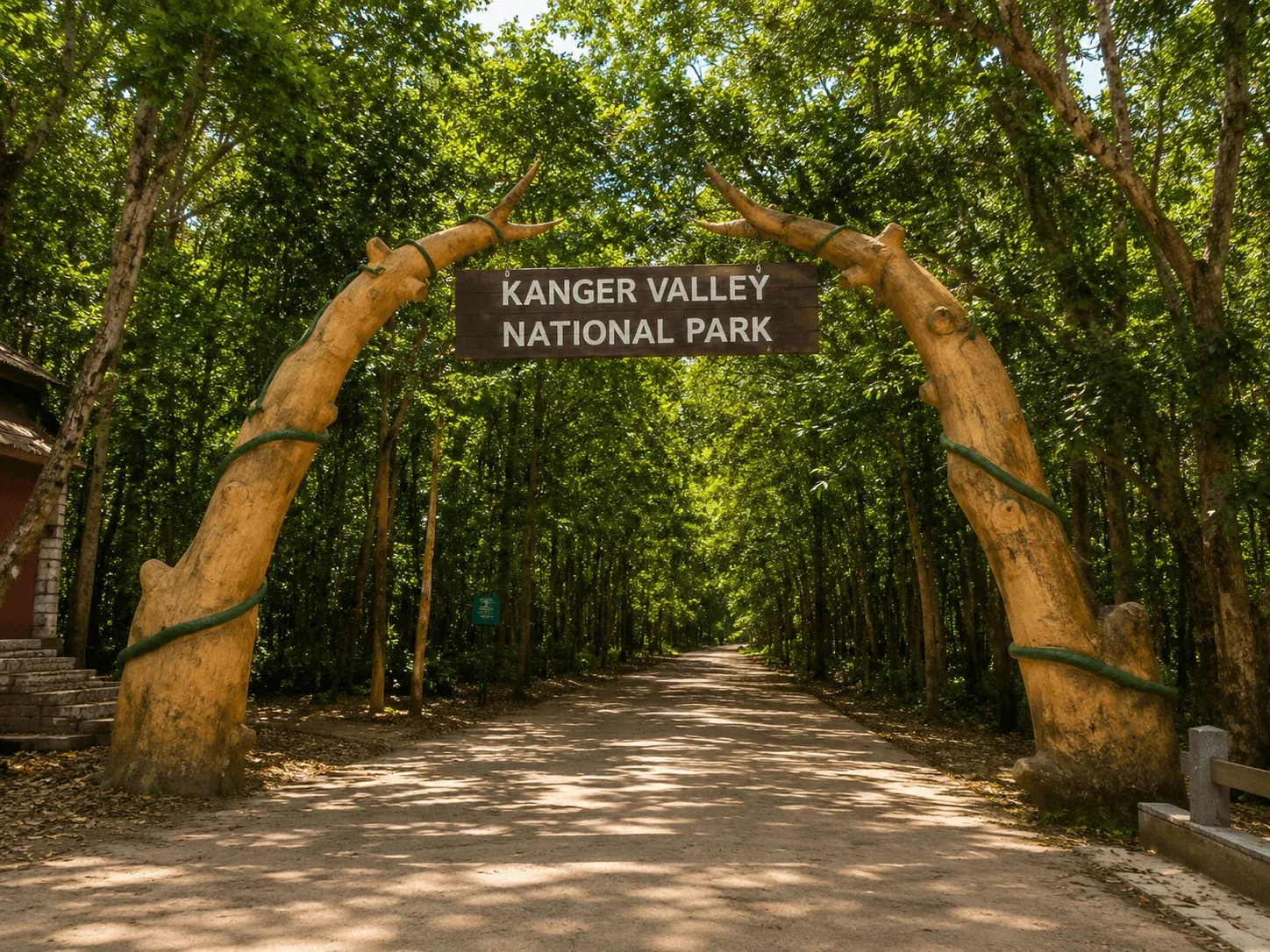
A Glimpse into the History of Kanger Valley National Park
The Ancient Forest of Bastar
Long before it became a protected national park, the Kanger Valley forest was part of the vast royal hunting territory of the Bastar kingdom, stretching across what are today the Kanger, Darbha, and Machkote forest ranges. The Gond and Maria tribal communities who have inhabited Bastar for centuries considered this forest sacred, practising sustainable hunting and forest gathering traditions that kept the ecosystem largely intact for generations. The Kanger River, which gives the park its name, flows through the entire length of the valley, carving gorges and cave systems over millions of years of slow geological action.
From Forest Reserve to National Park
The British colonial administration first declared portions of the Kanger forest as reserved land in the late 19th century to protect the dense sal timber cover. After independence, successive Madhya Pradesh state governments maintained the forest as a protected reserve. When Kanger Valley was formally gazetted as a National Park on 22 July 1982, it became one of the smallest national parks in India — yet scientists have consistently identified it as one of the most densely biodiverse, with unique cave-dwelling species found nowhere else on earth.
The Underground Story: Caves of Kanger
The limestone cave systems within Kanger Valley are the result of millions of years of underground water carving through soft karst rock. Kotumsar Cave — one of India's longest known natural caves at roughly 330 metres — was formally explored and documented only in the 1950s, and even today geologists believe large sections remain unmapped. The Kailash and Dandak caves were surveyed more recently, each revealing their own distinct stalactite and stalagmite formations. Blind fish and rare invertebrates found inside these cave systems have drawn international scientific attention to the park.
Significance of Kanger Valley National Park
Kanger Valley is significant on multiple levels that are rarely found in a single 200 sq km area. Above ground, the mixed humid deciduous forest — dominated by sal, teak, and bamboo — provides critical habitat for leopards, sloth bears, dholes, barking deer, four-horned antelopes, and the largest population of giant squirrels in central India. The Kanger River sustains mugger crocodiles in the Bhainsadhara area, making it one of the few river stretches in Chhattisgarh with confirmed crocodile sightings. Below ground, the cave networks host species uniquely adapted to permanent darkness, including blind fish — organisms of significant scientific value. For the state of Chhattisgarh, the park protects the habitat of the Bastar Hill Myna, an endangered bird known for its exceptional ability to mimic human speech.
Festivals & Events Around Kanger Valley
Bastar Dussehra (September–October)
The world's longest Dussehra festival, held 27 km away in Jagdalpur, runs for 75 days and is rooted entirely in Gondi tribal traditions. Unlike the northern Indian Dussehra which centres on Ramayana, Bastar Dussehra is built around the worship of the goddess Maa Danteshwari. Visiting Kanger Valley alongside Bastar Dussehra gives you a rare combination of natural wonder and authentic indigenous cultural celebration that you simply cannot find in any other part of India.
Wildlife Week (October)
Every year during the first week of October, Kanger Valley National Park participates in India's national Wildlife Week programme. The park organises nature walks, cave tours, birdwatching sessions, and tribal culture interactions that are open to visitors. For families and school groups, this is one of the best-organised periods to visit — activities are guided, informative, and genuinely engaging rather than simply tourism-oriented.
Did You Know? Blind Fish and Underground Life
The Kotumsar Cave inside Kanger Valley harbours a population of blind cave fish — Caecocypris basimi — that have evolved over thousands of years in complete darkness. These fish have lost their pigmentation entirely and their eyes have degenerated to vestigial organs since vision offers no survival advantage underground. They are among the rarest freshwater fish species in India, and the cave stream they inhabit is one of just a handful of known habitats for cave-adapted fish on the Indian subcontinent. This alone makes Kanger Valley a site of global ecological significance, quite apart from its more visible forest wildlife and waterfalls.
Travel Guide to Kanger Valley National Park
How to Reach Kanger Valley National Park
By Air: Jagdalpur Airport — Maa Danteshwari Airport (JGB) — is the closest airport, about 30 km from the park entrance. It has limited scheduled flights from Raipur under the UDAN scheme. Swami Vivekananda Airport Raipur (RPR) is the main hub at ~290 km, with taxis and buses to Jagdalpur available regularly.
By Train: Jagdalpur Railway Station (JDB) is the nearest railhead, approximately 20–25 km from the park, with connections to Visakhapatnam, Raipur, and beyond. Taxis and autos from the station reach the park gate in under 40 minutes.
By Road: The park is easily accessible from Jagdalpur via the Jagdalpur–Darbha road. NH-30 connects Jagdalpur to Raipur. From Jagdalpur city, the drive to the main park entrance takes around 30–40 minutes. Private taxis are readily available for full-day park trips.
Best Time to Visit
October to March is the ideal window. Weather is pleasant (14–28°C), the forest trails are accessible, and wildlife activity is highest in the cool mornings. The caves are open year-round but are best experienced in dry conditions when water levels inside are lower.
July to September (Monsoon) brings the Kanger River to full flow and Tirathgarh Falls to its dramatic peak, but some trails inside the park may be closed due to flooding. The caves stay open but access paths can be muddy.
April to June is hot (35–42°C) but the forest is quieter and wildlife tends to congregate around water sources, making early-morning animal sightings more likely near the river stretches.
Local Attractions
Tirathgarh Waterfall (~5 km inside park): India's most beautiful tiered waterfall — 91 metres, seven levels, inside the park itself.
Kotumsar Cave (~5 km): One of India's longest natural limestone caves — guided entry, helmets provided, home to blind fish.
Chitrakote Falls (~38 km): India's widest waterfall, 38 km from the park — the Niagara of India on the Indravati River.
Tips for Visitors
Buy your entry permit at the Forest Department gate before entering. Cave entry tickets and park entry are separate — plan your visit order in advance to save time.
Early morning game drives (6–9 AM) offer the best chance of spotting leopards, gaur, and barking deer before they retreat into dense cover for the day.
Inside the caves: wear the helmet provided, stay with your guide at all times, and avoid touching the stalactite formations — oils from skin damage them irreversibly over time.
Carry mosquito repellent and full-sleeve clothing for forest trails, especially if visiting during monsoon or post-monsoon when insects are active near the river banks.
Kanger Valley National Park Location
Image Gallery